
Pondless waterfalls in Las Vegas
The sound of water. The presence of stone. A smaller visible water footprint.
A pondless waterfall recirculates water from a hidden reservoir, over a waterfall or stream, and back through the collection area. It creates movement without a permanent open pond at the bottom.
Plan My Waterfall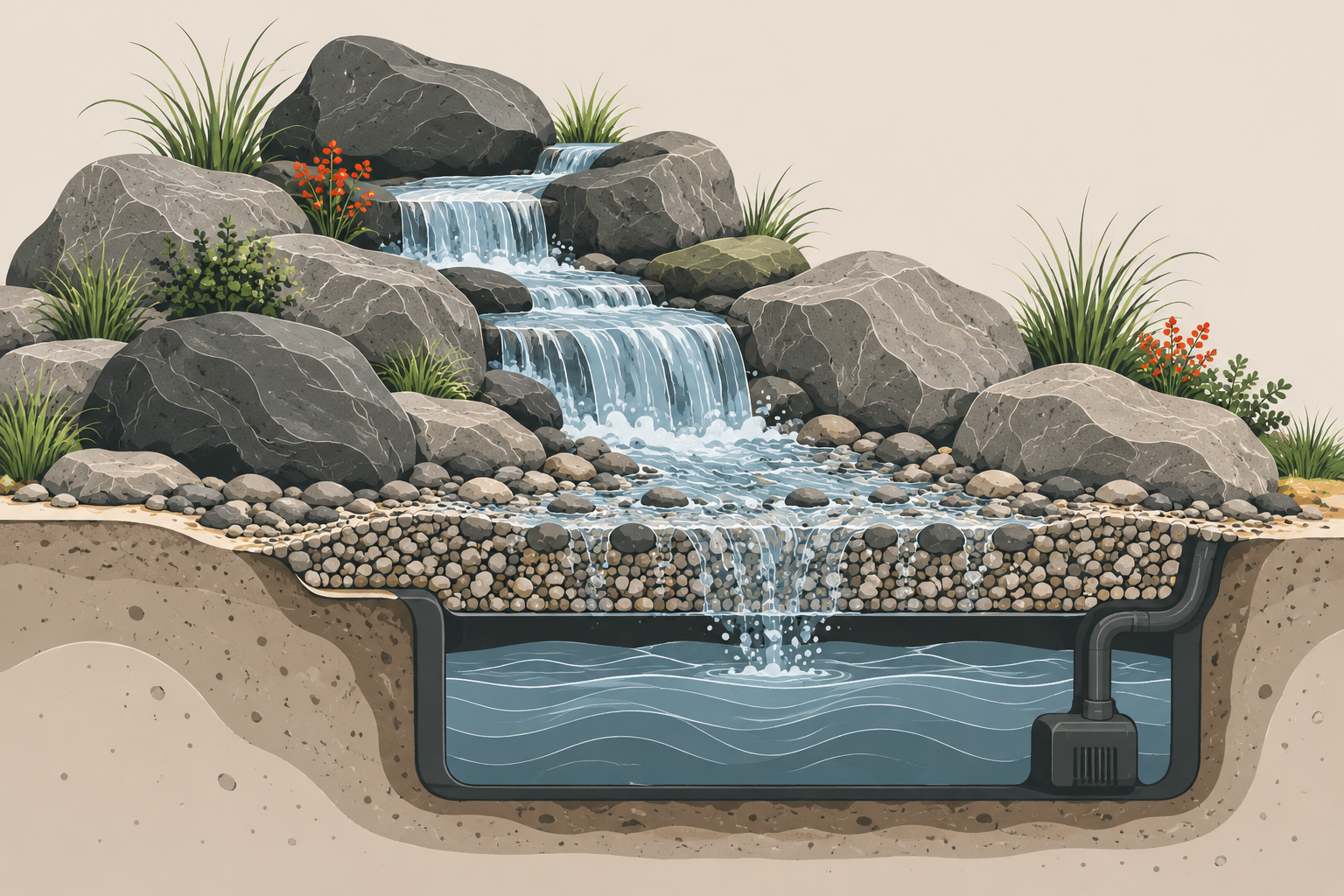
Backyard waterfalls shaped around your space
A gentle spill beside a seating area feels different from several drops across a broad stone face. We consider the drop, flow, stone shape, and distance from doors and neighbors when discussing the experience you want.
A feature that belongs in the landscape
Plan a compact cascade, a longer stream, or a boulder feature that anchors the yard. The visible stonework is only part of the project. Reservoir capacity, drainage, pump access, and splash control help the finished system work as intended.
Caring for a pondless waterfall
Pondless waterfalls still collect debris and can develop algae or mineral deposits. Water level, pump operation, reservoir access, and the collection area need attention. We can discuss an ongoing care plan and separate waterfall cleaning when needed.
Waterfall Care & MaintenanceA clear plan before construction
We review access, available space, power, the proposed water footprint, and local water-use requirements. A hidden reservoir is a design feature, not a blanket permit exemption.
Pondless waterfall FAQs
Water collects in a concealed reservoir beneath or beside the visible collection area. A pump sends it back to the top so the system recirculates.
A conventional pondless system is not a suitable koi habitat. Its hidden reservoir is designed for circulation and equipment, not for keeping fish. Choose a purpose-built pond if koi are part of the plan.
Many decorative systems can be scheduled when designed for it. Reservoir capacity, drainage, equipment instructions, and restart behavior need to be considered. This is different from shutting down life-support equipment on a stocked koi pond.
Removing a permanent open pond changes the water exposure, but it does not remove all hazards. Wet stone, access to equipment, and water collection areas still need safe design and supervision.
Evaporation, splash, wind, leaks, and an undersized or improperly filled reservoir can all contribute. A sudden change should be checked rather than treated as normal evaporation.