Types of Pond Plants That Feed Themselves
By Pond Builders Las Vegas · Published November 27, 2023 · Updated October 29, 2026
The phrase “plants that feed themselves” describes part of the story. Many aquatic plants use sunlight to make sugars through photosynthesis. They still need nutrients, water, suitable light, and the right growing conditions.
A plant can be easy to grow without being maintenance-free. The best choice depends on its growth habit and the space you can give it.
Floating-leaved plants
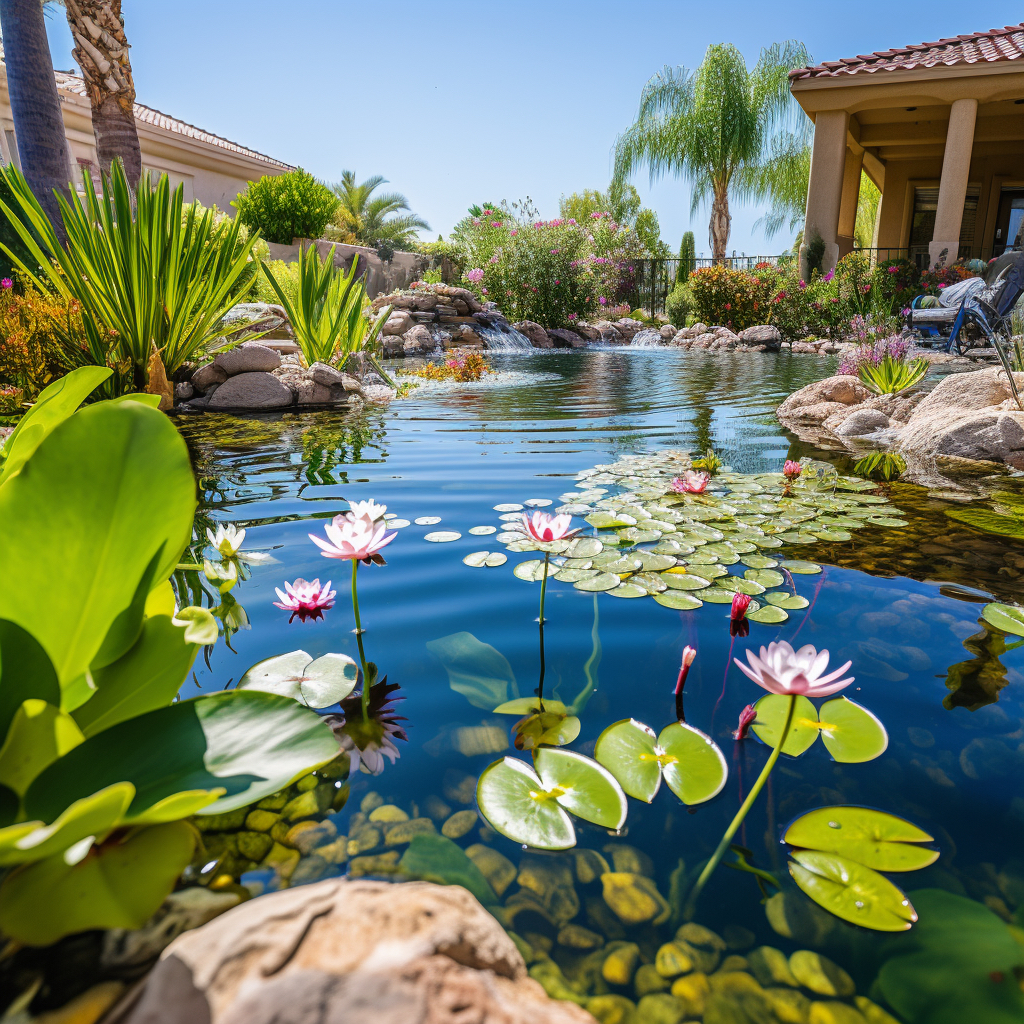
Water lilies root below the water while their leaves spread across the surface. Their flowers can be a focal point, and their leaves provide shade. Hardy and tropical lilies have different needs, and mature size varies widely.
Choose a variety for the available space and water conditions. Set the plant at the correct depth for that variety. Watch for old leaves, crowding, and fish disturbing the planting.
Plants for shelves and pond edges
Pickerelweed, arrowhead, rushes, and some irises are examples of plants used around shallow water or wet edges. The exact planting level matters. A plant that likes wet soil may not tolerate a deeply submerged crown.
Contain spreading plants and leave access for service. Do not assume every iris or grass-like plant is the same species or suitable for the same depth.
Submerged and free-floating plants
Submerged plants grow mostly below the surface. Free-floating plants are not anchored in a soil bed. Both groups can grow quickly in favorable conditions.
An “oxygenating” label does not mean a plant can replace aeration. Plants also respire, and dense growth or decaying material can create problems. Some well-known aquarium and pond plants are invasive or regulated. Check the exact species before buying, sharing, or moving it.
Do pond plants need fertilizer?
Some plants can use nutrients already present in the pond. Others may need carefully selected aquatic fertilizer, depending on the species, growing medium, and conditions. Too much nutrient input can create new water-quality or algae problems.
Yellow leaves or weak growth do not prove that fertilizer is the answer. Light, temperature, planting depth, root condition, pests, and competition may also be involved.
Build a planted pond with room to breathe
Use a mix that fits the design and remains manageable. Remove dying material. Protect vulnerable plants from koi where needed. Keep intakes clear and leave open water and service access.
Our plant reference library helps you compare growth habits and identify concerns before choosing plants. It includes species for identification as well as planting ideas; an entry is not a recommendation to buy it.
Explore The Aquatic Plant LibraryPond plant nutrition questions
No. Photosynthesis makes sugars using light, water, and carbon dioxide. Plants also need mineral nutrients for growth. Where those nutrients come from depends on the plant and the pond.
Do not substitute lawn or garden fertilizer for a pond-specific plan. The product, dose, and placement matter, especially around fish. Follow an appropriate aquatic product label and get advice for the plant and system.
No. Plants are one part of the system. Light, nutrient input, fish load, filtration, and maintenance still affect algae. Excess growth or dying plants can add to the problem.
Check the species' requirements. A wet-soil plant may need its crown above the water, while another tolerates a shallow shelf. The label alone does not establish a safe planting depth.